

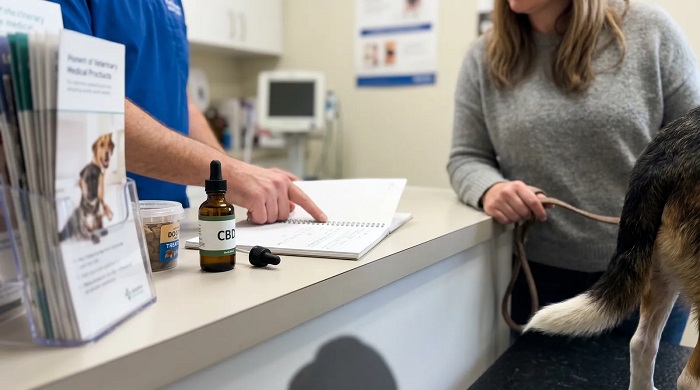
Over the past decade, veterinary medicine has witnessed a decisive shift in how companion animal cannabinoids are evaluated. What began as scattered owner anecdotes and unregulated commercial enthusiasm has steadily transformed into a subject of rigorous, peer-reviewed clinical scrutiny. Academic institutions and veterinary teaching hospitals have moved past speculative dialogue, deploying controlled clinical trials to test whether cannabidiol delivers measurable therapeutic benefits for domestic animals.
While these initial investigations confirm that phytocannabinoids possess genuine pharmacological activity in dogs and cats, they also illuminate a substantial gulf between marketing claims and established clinical science. For veterinary professionals and dedicated pet owners seeking evidence-based guidance, understanding where the science currently stands—and where significant blind spots persist—is essential.
Where the Evidence Is Strongest: Key Clinical Findings
Veterinary trials have largely concentrated on chronic, treatment-resistant disorders that significantly diminish a pet’s quality of life. Among these, canine mobility and neurological disorders have accumulated the most compelling clinical data.
Canine Osteoarthritis and Mobility Support
The most consistent positive findings in veterinary literature involve chronic joint inflammation and osteoarthritis. Placebo-controlled, double-blind trials have repeatedly shown that consistent oral administration of cannabidiol produces quantifiable improvements in comfort and activity levels in osteoarthritic dogs.
Researchers measuring outcomes through validated owner-assessment tools, such as the Canine Brief Pain Inventory, along with objective veterinary physical examinations, have documented significant decreases in pain severity scores and marked enhancements in limb-load bearing. These benefits stem from the compound’s modulation of peripheral cannabinoid receptors and its secondary inhibition of pro-inflammatory cytokines within synovial tissues. Crucially, many dogs undergoing cannabinoid therapy in these trials were able to reduce their reliance on conventional non-steroidal anti-inflammatory drugs or adjunctive pain medications, suggesting a meaningful opioid- and NSAID-sparing potential.
Refractory Idiopathic Epilepsy
Another area showing genuine therapeutic promise is seizure management, particularly for canine patients that fail to respond adequately to conventional antiepileptic protocols.
In randomized clinical investigations assessing dogs with intractable idiopathic epilepsy, adding oral cannabidiol to existing multi-drug regimens resulted in a statistically significant reduction in monthly seizure frequency for a notable portion of subjects. While the compound rarely eliminates seizure activity altogether, it appears to stabilize neuronal excitability through non-receptor mechanisms, including the dampening of calcium signaling across central synapses. It represents one of the few novel oral adjuncts explored for refractory cases in modern veterinary neurology.
Situational Anxiety and Stress Responses
Behavioral investigations have begun examining how cannabinoids modulate acute acute fear responses triggered by environmental stressors, such as separation, vehicular travel, and thunderous noise aversion.
Controlled canine and feline trials suggest that targeted dosing can dampen acute fear markers, such as pacing, panting, cortisol spikes, and stress-related elimination. However, the outcomes in behavioral studies remain more heterogeneous than those in joint mobility trials. Cannabinoids appear far more reliable as an adjunctive support for situational environmental distress than as a standalone solution for deep-seated, chronic behavioral aggression or generalized anxiety.
Pharmacokinetics: How Companion Animals Process Cannabinoids
Beyond clinical outcomes, laboratory researchers have dedicated immense effort to mapping feline and canine pharmacokinetics. These physiological trials reveal that animals process botanical extracts in ways that differ fundamentally from humans.
Bioavailability and Food Dynamics
Cannabidiol is a highly lipophilic compound, meaning its absorption is deeply contingent on the presence of dietary fats. When administered in a fasted state, oral bioavailability in dogs is notoriously low and erratic, often falling below twenty percent.
Administering the compound alongside a meal rich in lipids, or suspended within a carrier oil such as medium-chain triglycerides, dramatically elevates peak serum concentrations and extends the therapeutic window. The terminal elimination half-life in canines typically spans between four to nine hours depending on the extract matrix, underscoring why twice-daily administration is standard across successful clinical protocols.
Hepatic Enzyme Elevations
Across nearly every published canine trial, safety monitoring has revealed a consistent biochemical finding: a marked, dose-dependent elevation in serum alkaline phosphatase (ALP).
While this liver enzyme spike is rarely accompanied by elevations in other hepatic markers such as bilirubin, and dogs generally show no clinical signs of liver distress, it remains a central point of interest. Scientists currently hypothesize that this enzyme increase represents an upregulation of hepatic clearance pathways rather than overt hepatocellular damage, but routine baseline and periodic blood panels remain a standard recommendation for any patient receiving extended cannabinoid care.
Critical Knowledge Gaps Facing Veterinary Medicine
Despite meaningful progress, researchers face substantial obstacles that prevent cannabinoid medicine from becoming fully integrated into standard clinical protocols.
The Stark Deficit in Feline Data
The vast majority of existing veterinary literature focuses almost exclusively on dogs. Feline data remains severely constrained, with fewer completed trials, tiny sample cohorts, and elevated dropout rates stemming from unpalatable formulations.
Cats possess unique metabolic characteristics, including deficient hepatic glucuronidation pathways, which make them far more susceptible to compound accumulation and toxicity. Preliminary feline pharmacokinetic studies show that cats achieve lower peak serum levels than dogs given identical doses, yet their clearance times can be extended. Extrapolating canine dosages to felines is scientifically invalid and potentially dangerous, leaving feline medicine with a significant evidence gap that requires dedicated, feline-specific investigation.
Drug Interactions and Cytochrome P450 Clearance
Cannabinoids are known to interact with the cytochrome P450 enzyme family—the very system responsible for metabolizing the majority of veterinary prescription medications.
Currently, empirical data regarding how cannabidiol alters the serum concentrations of standard veterinary drugs is critically thin. Clinicians lack detailed pharmacokinetic models showing whether simultaneous administration with phenobarbital, potassium bromide, gabapentin, or non-steroidal anti-inflammatories leads to toxic accumulation or accelerated clearance of those essential medications. Navigating polypharmacy in complex veterinary patients remains largely guided by clinical caution rather than definitive trial data.
The Disconnect Between Research Extracts and Retail Products
A glaring divide exists between the highly purified, pharmaceutical-grade extracts utilized in university laboratories and the consumer products sold on commercial retail shelves.
In published research, investigators work with certified, chemically uniform preparations that contain precise ratios of active cannabinoids, free from residual solvents and heavy metals. In contrast, the commercial retail space is plagued by inconsistent manufacturing standards, inaccurate label claims, and variable carrier preparations. A product from an unverified source may bear little resemblance to the formulation that produced positive results in a university hospital trial, creating unpredictable outcomes for consumers attempting to replicate study findings at home.
The Need for Long-Term Toxicological Profiles
Most published clinical trials run for periods of four to twelve weeks. Consequently, veterinary medicine currently possesses almost no empirical data documenting the effects of daily, multi-year administration.
Whether chronic cannabinoid exposure induces subtle shifts in endocrine function, compromises immune surveillance, or alters renal physiology in geriatric companion animals remains an open scientific question. Multi-year longitudinal studies are urgently needed to establish safety profiles that span the full lifespan of companion animals.
Until broad-scale pharmacokinetic and long-term toxicology studies fill these structural gaps, cannabidiol will remain an encouraging yet unfinished frontier in veterinary care. The current scientific consensus affirms its functional value as a complementary therapeutic agent, but demands that clinicians and owners alike approach its use with measured expectations, professional medical oversight, and an unwavering commitment to product transparency.
