

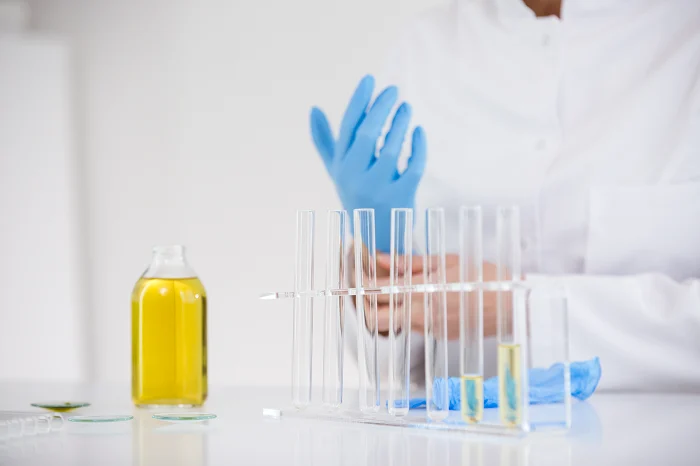
For years, the commercial hemp industry faced an inescapable biological problem: the human body is mostly water, and cannabinoids are oil. When a consumer swallows a standard oil-based tincture or gummy, the unformulated botanical extract resists mixing with digestive fluids, grouping into large hydrophobic droplets that the digestive tract struggles to process. As a result, traditional oral cannabidiol products typically deliver an underwhelming oral bioavailability between six and fifteen percent, with onset times dragging anywhere from forty-five minutes to two full hours.
That frustrating gap between nominal label potency and real systemic absorption has driven a major technological shift. Product developers are increasingly leaving crude botanical carrier oils behind in favor of nanoemulsion technology. By adapting advanced colloidal chemistry and pharmaceutical drug delivery techniques to botanical extracts, formulators can transform thick, hydrophobic hemp resin into clear, water-compatible dispersions. The result is a fundamental overhaul of how cannabinoid products look, taste, and perform.
The Physical Chemistry Behind Nanoemulsion Systems
At its core, a nanoemulsion is an advanced oil-in-water colloidal dispersion where microscopic oil droplets are suspended throughout an aqueous continuous phase. In standard oil mixtures, dispersed droplets measure between one and one hundred micrometers across. Nanoemulsions, by contrast, reduce droplet size down to a scale of twenty to two hundred nanometers—roughly a thousand times smaller than the thickness of a human hair.
Achieving this extreme size reduction requires powerful mechanical forces paired with tailored surface chemistry. Formulators typically deploy one of three specialized processing methods:
-
Ultrasonic cavitation: Utilizing high-frequency sound waves to create microscopic vacuum bubbles in the fluid that implode violently, shattering oil droplets through localized shockwaves.
-
High-pressure homogenization: Forcing the oil and water blend through microscopic orifices under extreme pressure, often exceeding fifteen thousand pounds per square inch, to shear the particles apart.
-
Microfluidization: Directing high-velocity streams of fluid into specialized micro-channels where they collide with immense kinetic energy, producing exceptionally narrow and uniform droplet size distributions.
Mechanical force alone, however, cannot keep nanoscale droplets from immediately merging back together. Because shrinking droplet size creates a massive expansion in surface area, it introduces substantial surface tension. To prevent the droplets from colliding and recombining, formulators introduce surfactants and co-surfactants. These amphiphilic molecules possess both a water-loving head and an oil-loving tail, forming a protective interfacial membrane around each nano-droplet that keeps the formulation kinetically stable over extended shelf lives.
Overcoming the Digestive Bioavailability Bottleneck
The biological advantages of shrinking droplet dimensions become obvious once a product enters the digestive tract. Standard dietary fats require extensive biological processing before absorption can occur. The stomach must churn the fats, and the liver and gallbladder must secrete bile salts to break down the lipid mass into mixed micelles that intestinal cells can absorb.
If an individual consumes a standard oil tincture on an empty stomach, bile secretion remains minimal, causing the vast majority of the cannabinoid payload to pass unabsorbed through the gastrointestinal tract. Even the fraction that crosses the intestinal wall travels directly through the hepatic portal system, where liver enzymes aggressively degrade active compounds through first-pass metabolism.
Nanoemulsions completely change this physiological pathway. Because the cannabinoid droplets are already broken down to the nanometer scale, they do not require extensive bile-mediated micellization to diffuse through the unstirred aqueous layer of the intestine. The tiny droplets pass rapidly through the mucus barrier and interact directly with epithelial cells, allowing significantly more active compound to enter circulation.
Furthermore, this rapid uptake significantly compresses the onset window. While conventional oil tinctures often leave consumers waiting over an hour for noticeable effects, nanoemulsified liquid formulations routinely achieve meaningful plasma concentrations within fifteen to thirty minutes. This speed and predictability bridge the gap between wellness supplements and reliable, functional routines.
Opening New Frontiers in Product Development
Beyond superior absorption metrics, nanoemulsion technology fundamentally expands the types of consumer products manufacturers can create, unlocking categories that were previously incompatible with raw botanical oils.
Shelf-Stable and Optically Clear Beverages
Ready-to-drink functional beverages were historically the most problematic category in the hemp sector. Dropping crude extract or standard oil emulsions into canned water or soda inevitably produced unsightly oil rings, cloudiness, sediment settling, and rapid degradation on the shelf.
Because nanoemulsion droplets are smaller than the wavelength of visible light, light waves pass through them without scattering. This optical phenomenon allows formulators to create completely transparent, shelf-stable liquid infusions that blend seamlessly into sparkling waters, sports drinks, and botanical tonics without phase separation or emulsion collapse.
Fast-Dispersing Edibles and Sublingual Formats
In confectionery manufacturing, traditional baking and cooking temperatures subject raw hemp extract to destructive heat cycles, frequently degrading active cannabinoids and volatile terpenes. By incorporating water-dispersible nanoemulsion powders—created by spray-drying liquid nanoemulsions onto carbohydrate carriers like maltodextrin or cyclodextrins—manufacturers can formulate gummies, mints, and dissolvable sublingual strips that release consistently and avoid oily textures.
Advanced Topical and Transdermal Delivery
The outermost layer of mammalian skin, the stratum corneum, is an exceptionally formidable barrier designed to keep external chemicals out. Standard topical salves sit primarily on the skin surface, providing localized soothing but struggling to penetrate deeper dermal layers. Nanoscale droplets dramatically enhance skin permeation, carrying active cannabinoids deeper into underlying muscular and joint tissues to provide rapid localized relief.
Formulation Realities: Stability, Surfactants, and Taste
Despite its clear advantages, producing commercial-grade nanoemulsions is a demanding chemical engineering process with distinct formulation challenges.
The primary hurdle lies in balancing surfactant performance with clean-label consumer preferences. Early pharmaceutical nanoemulsions relied on synthetic surfactants like polysorbates and PEGs. However, modern wellness consumers actively reject synthetic chemical additives. Formulators are tasked with achieving thermodynamic stability using natural, plant-derived emulsifiers such as sunflower lecithin, Quillaja saponins, modified food starches, and gum acacia. These natural ingredients can be far more sensitive to pH shifts, mineral hardness in municipal water supplies, and temperature fluctuations.
Instability mechanisms also pose ongoing manufacturing risks. If a formulation is under-stabilized or exposed to thermal stress, it can fall prey to Ostwald ripening, a physical process where smaller droplets dissolve and diffuse through the continuous phase to attach onto larger droplets. Over months of warehouse storage, this gradual coalescence can cause an initially clear liquid to turn cloudy, separate into visible layers, or lose its fast-acting pharmacokinetic properties.
Finally, formulators must tackle sensory challenges. Cannabinoids are naturally bitter, astringent compounds. When an oil droplet is shattered into millions of nanometer-sized particles, its total contact surface area with human taste receptors increases exponentially. Without advanced natural taste-masking technologies, bitter blockers, or botanical flavor pairing, a water-soluble nanoemulsion can create an overpowering, metallic bitterness that ruins the consumer drinking experience.
The Shift Toward Precision Formulation
The adoption of nanoemulsion technology marks the transition of the hemp sector from an unregulated agricultural novelty into a disciplined science of precision delivery. As consumer expectations rise, the crude practice of simply dissolving hemp extract in coconut oil and hoping for the best is losing its commercial viability.
Brands that master nanoscale formulation, invest in verified stability testing, and prioritize clean, food-grade ingredients are establishing an enduring competitive advantage. By aligning botanical potential with the proven laws of colloidal physics, nanoemulsion technology is delivering what consumers have wanted from the beginning: clean, fast-acting, and dependable wellness products that perform exactly as promised.
