

The explosion of interest in canine and feline wellness has brought a flood of hemp-derived products to pet store shelves and online storefronts. From joint stiffness in aging retrievers to thunderstorm anxiety in rescue cats, pet parents are increasingly exploring cannabidiol as a complementary support tool. Yet the pet wellness market remains loosely regulated, and the variation in product purity, potency, and safety across commercial brands is staggering.
Because animals metabolize compounds differently than humans, guessing your way through a supplement purchase carries real health risks. Before introducing any bottle or bag of chews to your companion, work through this comprehensive checklist to ensure you are selecting an effective, uncontaminated, and pet-appropriate product.
Consult Your Veterinarian First
Before evaluating brands, have an honest discussion with your veterinarian. Even though pet owners often seek holistic alternatives independently, introducing cannabinoids into your pet’s system is not without clinical implications.
CBD is metabolized primarily by the liver through the cytochrome P450 enzyme pathway. This enzyme system is responsible for breaking down a wide variety of conventional veterinary pharmaceuticals, including non-steroidal anti-inflammatory drugs, anti-seizure medications, and certain heart therapies. Introducing CBD alongside these medications can alter how quickly prescription drugs clear your pet’s system, potentially leading to accidental toxicity or diminished therapeutic efficacy.
A veterinarian familiar with your pet’s medical history can identify potential contraindications, evaluate organ function through baseline bloodwork, and help you establish realistic goals rather than falling for cure-all marketing promises.
Demand a Batch-Specific Certificate of Analysis
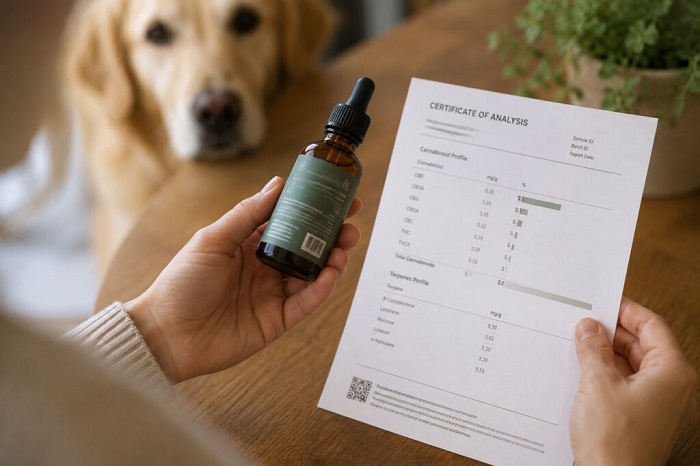
Never buy a pet CBD product from a manufacturer that does not publish an independent, third-party Certificate of Analysis, commonly referred to as a COA. A legitimate brand will provide a QR code on the packaging or a direct batch-lookup tool on their website leading to these lab documents.
Verifying Cannabinoid Potency
A third-party laboratory should analyze the exact concentration of active cannabinoids in the batch. Check the lab report against the product box: does the stated milligram amount of CBD match what the independent chemist measured? Significant discrepancies between the label claim and the laboratory readout indicate poor manufacturing controls and inconsistent dosing.
Screening for Environmental Contaminants
Cannabis and industrial hemp are dynamic bioaccumulators, meaning they readily pull heavy metals, agricultural chemicals, and pollutants out of the soil where they grow. A complete COA must go beyond cannabinoid potency to include clear testing panels for:
-
Heavy metals: Testing for lead, arsenic, cadmium, and mercury.
-
Pesticides and herbicides: Confirming zero synthetic chemical residue from the cultivation phase.
-
Residual solvents: Verifying that solvents like ethanol, butane, or propane used during botanical extraction were entirely purged.
-
Biological pathogens: Screening for mold, yeast, salmonella, and mycotoxins that can compromise sensitive animal digestive tracts.
If a company only provides an in-house test result or shares a COA dated two years prior for a completely different lot number, look elsewhere.
Scrutinize the THC Concentration
Dogs possess a far higher density of cannabinoid receptors in the brain, particularly in the cerebellum and brainstem, than humans do. This anatomical difference makes canines extraordinarily sensitive to tetrahydrocannabinol, the psychoactive compound found in cannabis. What constitutes a mild, imperceptible dose of THC for a person can trigger acute toxicity in a dog.
Symptoms of THC intoxication in pets include static ataxia, urinary incontinence, hyperesthesia, dilated pupils, vocalization, and dangerous drops in body temperature.
To keep your pet safe, confirm that the product is extracted strictly from legal industrial hemp containing less than 0.3 percent THC by dry weight. For especially sensitive pets or cats, consider broad-spectrum extracts or pure CBD isolates where all detectable traces of THC have been systematically removed through chromatography.
Beware the Hemp Seed Oil Deception
One of the most frequent consumer traps in pet retail is confusing hemp seed oil with active CBD extract. Many online marketplaces carry bottles labeled with claims like hemp oil, pure hemp extract, or thousands of milligrams of active hemp, sold at low prices.
Hemp seed oil is cold-pressed from the seeds of the plant. While it is an excellent source of omega-3 and omega-6 fatty acids, hemp seeds contain virtually zero cannabinoids. True CBD must be extracted from the aerial parts of the mature plant, specifically the flowers, leaves, and stalks.
Always look for explicit phrasing on the ingredient panel that lists cannabidiol or hemp extract with naturally occurring CBD, complete with a designated milligram strength per milliliter or chew. If the ingredient deck only names cold-pressed hemp seed oil without listing active CBD milligrams, you are buying a culinary fat supplement, not a therapeutic cannabinoid product.
Examine Carrier Oils and Inactive Ingredients
The liquid base used to deliver the CBD is just as important as the extract itself. Cannabinoids are fat-soluble, which means they must be suspended in a lipid to be absorbed properly through the intestinal wall.
Opt for clean, gentle carrier oils such as:
-
Organic MCT oil (coconut-derived): Easily absorbed, mild on the digestive tract, and virtually flavorless.
-
Hemp seed oil: Works well as a carrier for actual CBD extract while providing complementary essential fatty acids.
-
Extra virgin olive oil: Well-tolerated by most dogs and cats in moderate amounts.
Equally critical is auditing the inactive ingredients for hazardous additives. Avoid products containing synthetic preservatives, artificial colorings, or essential oils that can irritate animal organs. Above all, check treats and flavored tinctures for xylitol (often listed as birch sugar or birch bark extract). Xylitol is a standard human sugar substitute that is rapidly fatal to dogs even in minuscule quantities due to massive insulin release and acute hepatic failure.
Choose Graduated Tinctures Over Pre-Made Chews
While bacon-flavored soft chews are convenient, liquid tinctures packaged in dark glass bottles with calibrated droppers offer superior safety and precision.
Pre-made treats can vary in consistency, meaning one chew may hold noticeably more extract than another from the same bag. Furthermore, if a treat dries out or breaks apart, dosing accuracy drops significantly. A calibrated glass dropper allows you to measure milligram servings down to a fraction of a milliliter, making it easy to adapt the serving size as your pet adjusts or their body weight shifts.
Follow a Disciplined Starting Protocol
Once you have verified the purity, label honesty, and ingredients of your chosen product, the final safety check lies in administration.
Never jump straight to a full manufacturer-suggested dose. Every animal’s endocannabinoid tone and metabolic rate are unique. Begin with a minimal baseline dose, often around 0.1 to 0.2 milligrams of CBD per pound of body weight, administered twice daily with food to aid absorption.
Maintain that initial serving for at least five to seven days while tracking your pet’s demeanor, gait, appetite, and stool quality. Watch closely for signs of over-sedation, loose stools, or unusual lethargy. If your pet tolerates the starting level well without adverse signs but needs greater relief, increase the serving incrementally over several weeks until you observe the desired functional support.
Taking the time to verify clean lab tests, evaluate carrier ingredients, and manage dosage carefully ensures that your pet receives all the potential comfort of high-grade botanical wellness without unnecessary risks.
