

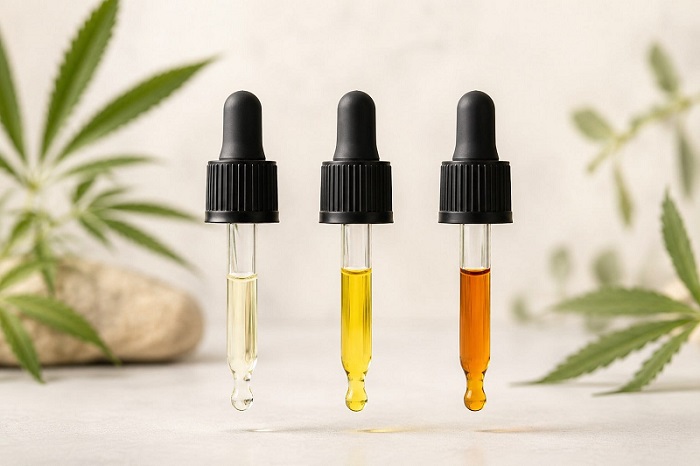
Anyone shopping for hemp products quickly runs into an alphabet soup of botanical terms. What seems like a straightforward errand—picking up a bottle of CBD oil for sleep or sore muscles—instantly morphs into a chemistry lesson. Product labels proudly display terms like full-spectrum, broad-spectrum, and CBD isolate, often with significant price discrepancies and competing claims about which formula actually works best.
The confusion is understandable. While all of these products originate from the same plant, the manufacturing methods used to process them create vastly different formulas. Understanding how these extracts differ is the single most important step in choosing an option that aligns with your wellness goals, budget, and daily responsibilities.
The Anatomy of Full-Spectrum CBD
Full-spectrum extract represents the most natural, unadulterated form of hemp processing. When raw hemp undergoes clean solvent or carbon dioxide extraction, the resulting oil retains the entire chemical fingerprint of the plant.
This means that along with a high concentration of cannabidiol, full-spectrum formulas contain a diverse matrix of minor cannabinoids, such as cannabigerol (CBG), cannabichromene (CBC), and cannabinol (CBN). It also retains naturally occurring terpenes—the aromatic compounds responsible for the earthy, pine-like aroma of hemp—along with flavonoids, essential fatty acids, and trace amounts of tetrahydrocannabinol (THC). By federal law, hemp-derived full-spectrum products in the United States must contain less than 0.3% THC by dry weight, an amount far too low to produce intoxicating effects.
The primary advantage of full-spectrum oil is a biological synergy known as the entourage effect. This concept suggests that cannabinoids and terpenes work better together than in isolation. Minor cannabinoids help activate secondary receptor pathways throughout the human endocannabinoid system, while specific terpenes can enhance absorption and modulate how CBD interacts with the brain.
Because of this cooperative dynamic, many users report that full-spectrum extracts deliver more profound relief at lower serving sizes. It is typically the extract of choice for individuals dealing with stubborn nighttime restlessness, deep muscular tension, or joint stiffness that hasn’t responded to single-ingredient alternatives.
However, full-spectrum extracts come with notable trade-offs. The rich concentration of terpenes gives these oils an intense, bitter, botanical flavor that some people find difficult to swallow. More importantly, while 0.3% THC is non-intoxicating, daily use can cause trace THC metabolites to accumulate in bodily tissues, creating a legitimate risk of a positive result on standard workplace drug panels.
Demystifying CBD Isolate
At the opposite end of the processing spectrum sits CBD isolate. To create an isolate, processors take raw hemp extract through extensive purification cycles, including winterization, decarboxylation, distillation, and crystallization. This intensive refining strips away every other compound—all terpenes, all flavonoids, all minor cannabinoids, and every trace of THC.
What remains is pure, isolated cannabidiol, typically testing at 99% purity. The end product is a crystalline, chalk-white powder that looks nothing like the amber oils associated with whole-plant extracts.
CBD isolate offers two distinct benefits: absolute predictability and zero THC risk.
Because isolate contains no detectable THC whatsoever, it provides complete peace of mind for individuals who undergo regular drug screening. It is also flavorless and odorless, making it remarkably versatile. Manufacturers can seamlessly blend isolate into sparkling beverages, delicate fruit gummies, skin creams, and protein powders without leaving behind any lingering hemp aftertaste.
The drawback of isolate lies in its clinical behavior. Without supporting cannabinoids and terpenes to bolster its absorption, pure CBD displays what pharmacological researchers call a bell-shaped dose-response curve. In simple terms, this means isolate tends to work best within a relatively narrow serving window. Taking too little yields minimal results, while taking too much may actually decrease its effectiveness. Users often find they need significantly larger milligram amounts of isolate compared to full-spectrum oil to achieve the same tangible relief.
The Middle Ground: A Quick Word on Broad-Spectrum
While full-spectrum and isolate represent the two poles of the market, there is a popular bridge between them known as broad-spectrum CBD.
Broad-spectrum begins as a full-plant extract, preserving the beneficial minor cannabinoids and fragrant terpenes. However, it undergoes an additional chromatographic refinement designed specifically to identify, separate, and remove THC down to non-detectable levels.
For shoppers who want the synergistic advantages of the entourage effect but cannot risk consuming even nominal amounts of THC, broad-spectrum serves as a practical, middle-of-the-road alternative.
How to Choose: Practical Scenarios That Matter
Selecting the right extract type comes down to matching the profile of the oil to the practical realities of your daily life. Rather than asking which extract is objectively better, ask which one fits your specific circumstances.
Drug Testing and Professional Requirements
If your livelihood depends on passing regular drug screens—whether you are a commercial driver, a first responder, a healthcare worker, or a federal employee—CBD isolate is the clear and responsible choice. Even compliant full-spectrum products containing less than 0.3% THC can trigger a false positive on immunoassay urine screens over time. Isolate eliminates that variable entirely.
Symptom Intensity and the Therapeutic Window
If you are dealing with persistent physical discomfort, stubborn tension, or intense bouts of stress, full-spectrum extract generally offers superior support. The presence of secondary compounds like beta-caryophyllene and myrcene works alongside CBD to address inflammation and nervous system arousal from multiple biological angles.
Flavor Preferences and Product Versatility
For individuals with sensitive palates or those who want to cook with hemp extracts, isolate is infinitely easier to integrate. Dropping an unflavored isolate tincture into morning coffee or blending isolate powder into an afternoon smoothie provides a clean experience without changing the taste or texture of your food. Full-spectrum oils, by contrast, demand an acquired taste for bold, herbal flavors.
Calibrating Your Personal Regimen
Navigating the hemp market does not require advanced biochemistry, but it does require deliberate experimentation. If your lifestyle allows for full-spectrum products, starting with a modest whole-plant tincture often delivers the most reliable baseline of wellness support. If drug testing is a factor or you prefer a neutral, single-ingredient profile, isolate gives you targeted cannabidiol with complete safety and consistency.
Whichever direction you choose, always verify the product by reviewing an independent third-party laboratory report before buying. A transparent certificate of analysis will confirm the exact cannabinoid breakdown, prove the absence of harmful extraction chemicals, and guarantee that the label accurately reflects what is inside the bottle.
